
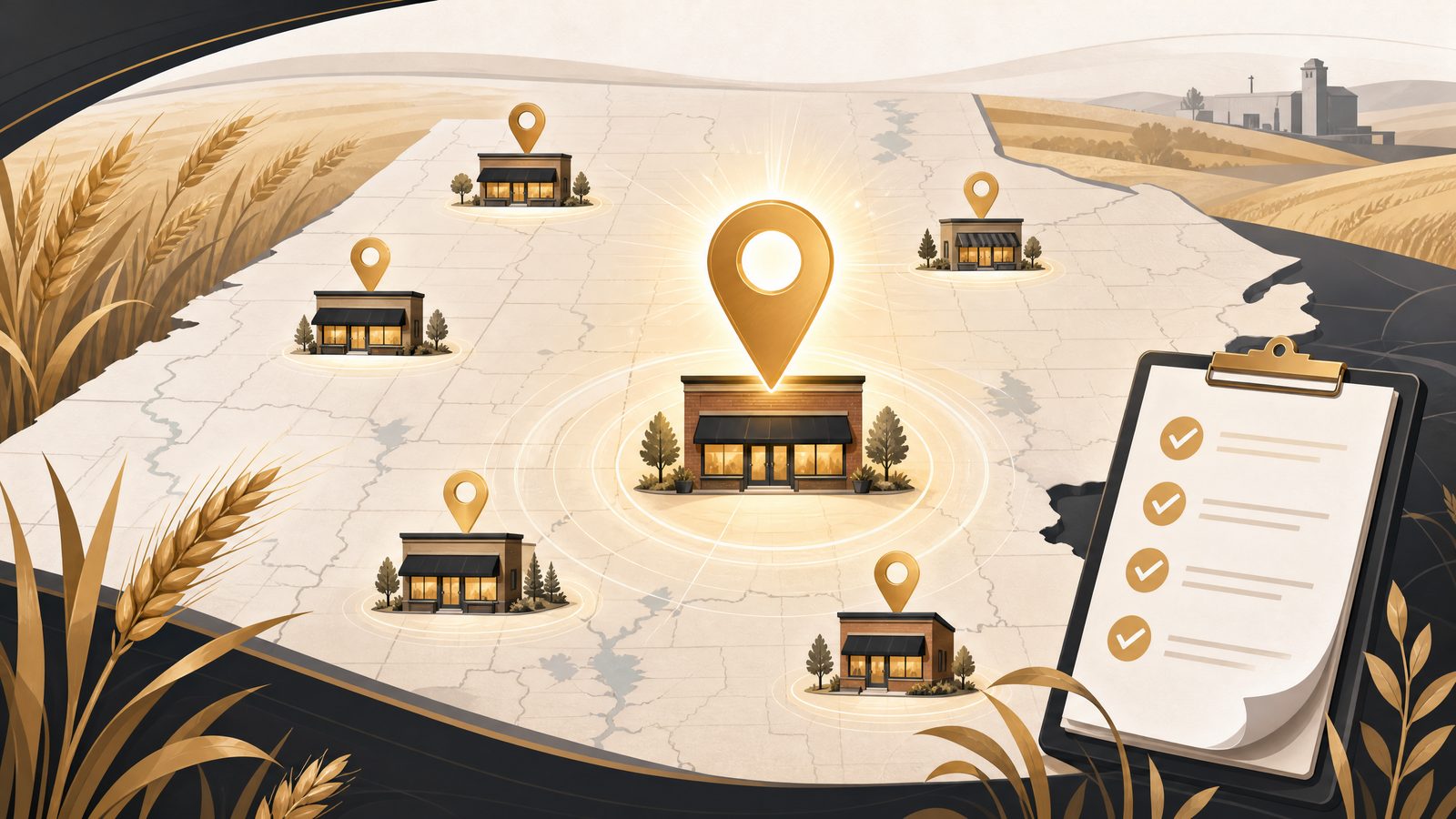
If your business serves customers in Saskatchewan, whether you’re in Saskatoon, Regina, Prince Albert, Moose Jaw, Swift Current, or North Battleford, your ability to show up on Google Maps and in local search results is one of the most powerful competitive advantages you can build. A well-executedlocal SEO checklist is the foundation of that advantage. Local SEO is the practice of optimizing your online presence so that nearby customers find you first when they search for the products or services you offer, and for Saskatchewan businesses, the opportunity is significant because local competition online is often far less fierce than in larger urban markets.
The good news is that dominating Google Maps and local search results does not require a massive budget or a technical background. What it requires is consistency, attention to detail, and a clear understanding of what Google is actually looking for when it decides which businesses to show. This checklist walks you through every critical step, from claiming your Google Business Profile to building citations across the web, so you can systematically improve your local visibility and start attracting more customers from your community.
Whether you’re launching a brand-new online presence or auditing an existing one, working through this checklist will give you a concrete action plan. Park Media works with businesses across Saskatchewan and Alberta to build websites and SEO strategies that drive real local results. If you’re looking for professional support alongside this guide, our SEO services and website subscription plans are built specifically for growing Canadian businesses.
[IMAGE-1]1. Claim and Verify Your Google Business Profile
Your Google Business Profile (GBP) is the single most important asset in your local SEO checklist. It is the listing that appears in the Google Maps panel and in the local “pack” of results at the top of a search page. If you have not yet claimed your listing, visit Google Business Profile and search for your business name. If a listing already exists, claim it. If not, create one from scratch.
Verification typically happens by postcard, phone, or email depending on your business type. Until your listing is verified, Google will not display it with full prominence. Complete this step before anything else: it unlocks all other optimizations.
2. Choose the Right Categories and Attributes
Google uses your primary category to determine which searches your business is eligible to appear for. Be precise. A “Plumber” listing in Saskatoon will perform better than a generic “Home Services” listing. Choose the most specific primary category that accurately describes your core offering, then add secondary categories for additional services you provide.
Attributes such as “Women-led,” “Wheelchair accessible,” or “Online appointments available” help your listing stand out and match more specific searches. Review every available attribute and enable those that apply honestly to your business. These small details contribute meaningfully to how Google scores your relevance for local queries.
3. Complete Every Field in Your Google Business Profile
Incomplete profiles are one of the most common local SEO mistakes. Google rewards completeness. Work through every available section of your profile:
- Business name:Use your exact legal or commonly known business name, no keyword stuffing.
- Address: Use your precise civic address consistent with how it appears on your website and elsewhere online.
- Phone number: Use a local area code when possible (306 or 639 for Saskatchewan, 780 or 587 for Alberta).
- Website URL: Link directly to your homepage or a relevant landing page.
- Hours of operation: Keep these accurate and updated for statutory holidays.
- Business description: Write a clear, keyword-relevant 750-character description that describes what you do, who you serve, and where you operate.
- Products and services: Add individual entries with descriptions and prices where applicable.
- Opening date: Shows tenure and builds trust.
4. Build a Strong Photo and Video Strategy
Businesses with photos on their Google Business Profile receive significantly more direction requests and website clicks than those without. Upload a high-quality cover photo, a recognizable logo, and a selection of images that reflect your actual premises, team, products, and work. Aim for a minimum of ten photos to start, and add new images regularly.
For Saskatchewan businesses especially, showing local context matters. A photo of your storefront in winter, your team at a community event in Moose Jaw, or a completed project in Prince Albert signals authenticity and local presence to both Google and prospective customers. Short videos, even thirty to sixty seconds, showing your space or process can further strengthen your profile.
5. Generate and Respond to Customer Reviews
Reviews are one of the strongest ranking signals in local SEO. The volume of reviews, their recency, their overall rating, and whether you respond to them all factor into how Google ranks your listing. The most effective way to generate reviews is simply to ask: after a completed job, a successful appointment, or a positive interaction, send a direct link to your Google review page.
Responding to Reviews: The Part Most Businesses Skip
Responding to every review, positive and negative, demonstrates active management of your profile and shows potential customers that you value feedback. For positive reviews, a brief, personalized thank-you is sufficient. For negative reviews, respond professionally, acknowledge the concern, and offer to resolve it offline. Never argue publicly. Your response is as much for future readers as it is for the reviewer.
6. Ensure NAP Consistency Across the Web
NAP stands for Name, Address, and Phone number. Google cross-references your business information across dozens of online directories, social profiles, and websites. When that information is inconsistent, such as a different phone number on Facebook or an old address in a Yellow Pages listing, it creates doubt about your legitimacy and suppresses your local rankings.
Audit your NAP across the most important platforms: your own website, Facebook, Yelp, the Better Business Bureau, local Chamber of Commerce directories, and any industry-specific directories relevant to your sector. Correct any discrepancies so that your business name, address, and phone number appear identically everywhere. This is foundational to the entire local SEO checklist.
[IMAGE-2]7. Build Localized Pages on Your Website
Your website needs to speak clearly to the communities you serve. If you operate in multiple Saskatchewan cities, consider dedicated service-area pages for each location, for example, a page titled “Plumbing Services in Regina” and a separate page for “Plumbing Services in Saskatoon.” Each page should include unique, substantive content that references the city by name, describes what you offer there, and ideally includes a locally relevant testimonial or project example.
At minimum, your homepage and contact page should prominently mention your service area. Embed a Google Map of your location. Include your full address in the footer. These signals collectively tell Google and visitors exactly where you operate. If you’re looking for professional web design support in your region, our teams offer dedicated Saskatoon web design, Edmonton web design, and Calgary web design services built around local SEO best practices.
Schema Markup for Local Businesses
Adding LocalBusiness schema markup to your website provides Google with structured data about your name, address, phone number, hours, and service area in a format it can read reliably. Most modern website platforms and SEO plugins support this, and a qualified web developer can implement it correctly as part of a well-built site. It is a technical step, but one that meaningfully strengthens your local SEO signals.
8. Publish Local Content Consistently
One of the most underutilized strategies in a local SEO checklist is content that directly addresses your community. Blog posts, project showcases, community involvement updates, and locally relevant guides all create opportunities for your website to rank for searches that your competitors are ignoring. A landscaping company in Swift Current writing about “the best plants for Saskatchewan’s short growing season” is targeting exactly the kind of long-tail search that drives qualified local traffic.
Google Posts, the short updates you can publish directly to your Google Business Profile, are another underused tool. Use them to promote seasonal offers, announce new services, share blog content, or highlight community events. They appear directly in your listing and signal an active, engaged business to both Google and potential customers.
9. Build Local Citations and Directory Listings
A citation is any online mention of your business’s NAP, even without a link. Citations from authoritative directories help Google confirm that your business is legitimate and located where you claim. Priority directories for Saskatchewan businesses include Google Business Profile (already covered), Yelp, Bing Places, Apple Maps, Facebook, Yellow Pages Canada, and your local Chamber of Commerce website. Industry-specific directories, such as Houzz for home services or Healthgrades for medical practices, carry additional weight in their respective verticals.
Building citations is a gradual process, but each one adds a small, cumulative boost to your local authority. Consistency in how your NAP appears across all of these listings remains essential throughout.
Quick Wins vs. Long-Term Local SEO Plays
Not every item on this local SEO checklist delivers results at the same speed. Some actions produce visible improvements within days or weeks; others build authority over months. Understanding this distinction helps you prioritize your efforts and set realistic expectations.
| Action | Category | Expected Timeline |
|---|---|---|
| Claim and verify Google Business Profile | Quick Win | Days |
| Complete all GBP fields including description | Quick Win | Days |
| Upload photos and set cover image | Quick Win | Days |
| Correct NAP inconsistencies on major platforms | Quick Win | 1–2 weeks |
| Ask existing customers for Google reviews | Quick Win | 1–4 weeks |
| Add LocalBusiness schema to your website | Long-Term Play | 2–6 weeks |
| Build localized service-area pages on your website | Long-Term Play | 1–3 months |
| Build citations across 20+ directories | Long-Term Play | 2–4 months |
| Publish regular local blog content | Long-Term Play | 3–6 months |
| Establish consistent review generation process | Long-Term Play | Ongoing |
The most effective approach is to knock out the quick wins immediately, then build the long-term plays into a regular routine. Businesses that treat local SEO as a one-time task rather than an ongoing discipline rarely sustain the rankings they initially achieve. For a detailed look at what professional SEO support includes, visit our subscription pricing page to see how SEO Essentials and SEO Accelerator plans are structured.
Put Your Local SEO Checklist Into Action
Saskatchewan businesses have a genuine opportunity to stand out in local search results. The steps in this checklist are not complicated, but they do require consistency and a website that is built to support them. Park Media’s subscription-based website service gives you a professionally built, fully maintained website on flexible month-to-month terms, designed from the ground up to perform well in local search. Pair that with one of our SEO plans and you have an integrated foundation for long-term local visibility. If you’re ready to stop being invisible in Google Maps and start capturing more local customers, the next step is straightforward.